



Maize ears from CIMMYT’s maize germplasm bank. Image courtesy of CIMMYT. See Montesinos-López et al. (2018), pages 3813–3828 and 3829–3840 where Deep Learning Neural Network methods for genome-enabled predictions of maize and wheat plant breeding data were applied.

Publications

GSA connects you to the field through a range of scholarly and community publications: our peer-reviewed journals offer two distinct platforms for communicating high-quality original research; our blog brings perspective to your research and career; and our newsletters keep you up to date with the latest opportunities and news from your community.

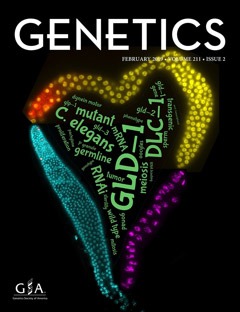
Journal: GENETICS

Rediscover GENETICS.

GENETICS publishes high-quality genetics and genomics research that expands scientific boundaries—we’ve been building the field since 1916. With its broad readership, rich history, and responsive editors, GENETICS brings the latest in publishing innovations to the communities it serves. We invite you to submit your research and discover the fast turnaround times and helpful review process for yourself.

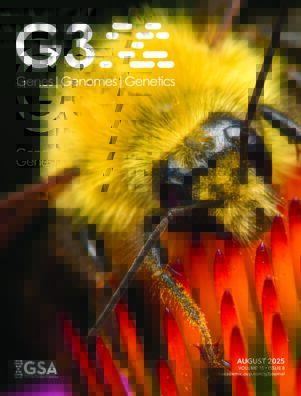
Journal: G3: Genes|Genomes|Genetics

Good data, shared widely.

Get your useful data out into the world by publishing in G3: Genes|Genomes|Genetics. G3 publishes high quality foundational research, particularly studies that generate useful genetic information, such as mutant screens, single gene studies, genome maps, genome sequence data, GWAS and QTL studies, software, data resources, and new methods. The Editorial Board of G3 believes that rapid dissemination of such data lays the foundation for many important insights.

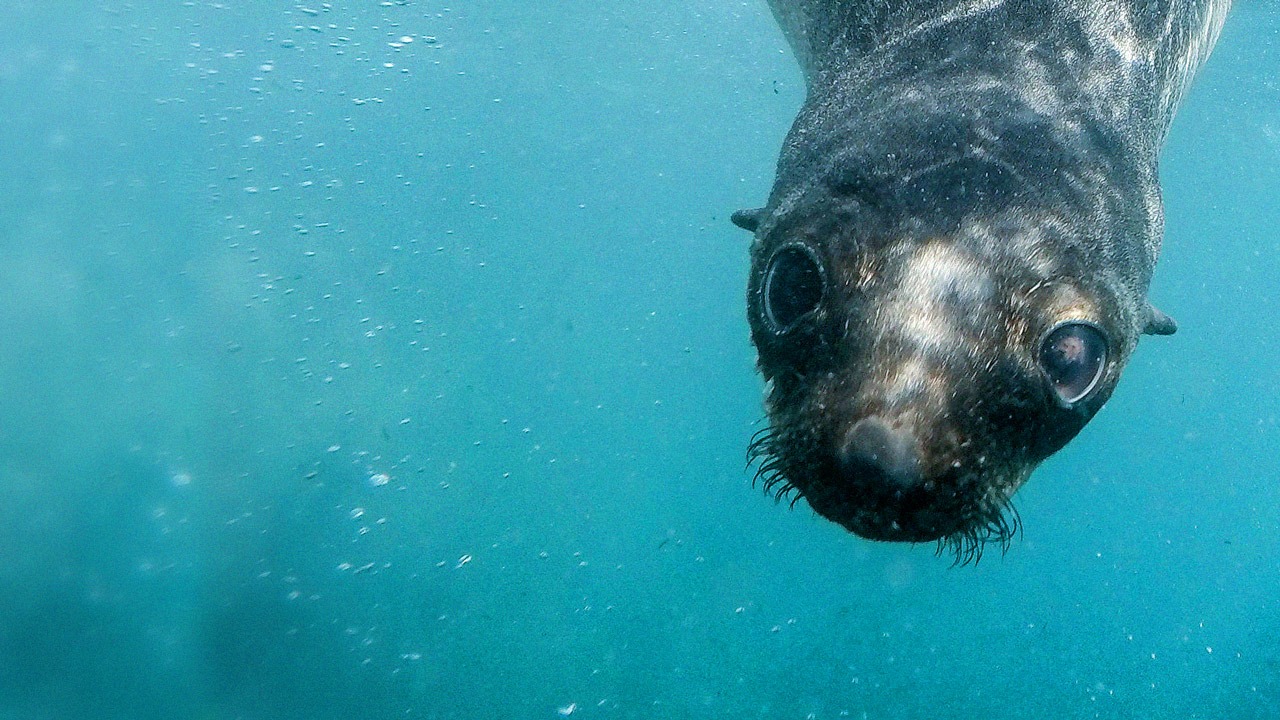
A young Antarctic fur seal (Arctocephalus gazella) playing in the waters of Bird Island, South Georgia during the 2016 breeding season. See Humble et al. G3 8: 2709–2722.

Why publish with GSA?

We treat authors as colleagues, not adversaries. Your time is important—and so is your research. Peer editors oversee the review process and give you clear guidance on how to address any reviewer comments; our helpful editorial staff keep the process moving and on time. We make it easy to submit: no formatting requirements on initial submission. Our dedicated editors work hard to keep time to first decision at around a month. And because we’re agile and community-driven, we’ve long been at the forefront of publishing innovations.

Promotional Toolkit for Authors

The GSA Journals are committed to helping authors get their work in front a wide audience. Our Promotional Toolkit for Authors contains pointers to help you promote your GENETICS or G3: Genes|Genomes|Genetics paper, including how GSA and Oxford University Press can help.

Learn More

The review experience has been the single most useful and pleasant of my career. The reviews were constructive and fair, the editor provided exceptionally clear guidance, and turn-around on the revision was lightning fast.

Catherine Linnen, GENETICS author
Blog: Genes to Genomes

Sharing community voices.

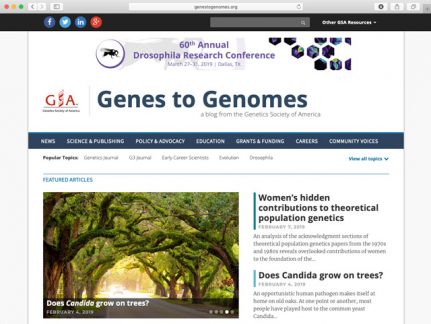
Genes to Genomes, the GSA blog, features news from the GSA community, highlights from the GSA journals, and posts from staff and guest authors about careers, professional development, science policy, publishing, education, outreach, equity and inclusion, and the intersections of science, art, and culture. Propose a guest post yourself and start a conversation!

WormBook Archives

In March 2016, GENETICS launched WormBook, a comprehensive compendium of review articles presenting the current state of knowledge in C. elegans research. WormBook articles span the breadth of the biology, genetics, genomics, and evolutionary biology of C. elegans. Find historical WormBook articles published as the online companion to WormBase here. This page contains the full list of all historical and GSA-published WormBook articles, organized by section.

Read the latest.

Congratulations, Fall 2025 Victoria Finnerty Travel Award recipients!-image
Featured

Congratulations, Fall 2025 Victoria Finnerty Travel Award recipients!

The Victoria Finnerty Undergraduate Travel Award supports conference-attendance costs for undergraduate GSA members who are presenting research at the Annual Drosophila Research Conference. #Dros26 will be held in Chicago, Illinois from March 4-8, 2026. Victoria Finnerty, who died in February 2011,...

Read more »

by Editorial Staff

Molecular evolution of octopamine receptors in Drosophila

AbstractOctopamine (OA), the insect analog of noradrenaline, plays important roles in diverse behavioral and physiological processes, from modulating fight-or-flight behavior to regulating post-mating ovulation. In Drosophila, six OA receptors have been identified: Oamb, Octα2R, Octβ1R, Octβ2R, Octβ3R, and Oct-TyrR, and they have been linked to different behavioral and physiological processes. Here, we investigated the evolutionary characteristics of these receptors across Drosophila species. We found that OA receptors are generally found as single-copy genes. Notably, Octβ2R...

Read more »

Low accuracy of complex admixture graph inference from f -statistics

AbstractF-statistics are commonly used to assess hybridization, admixture or introgression between populations or deeper evolutionary lineages. Using simulations, we find that network complexity had a large impact on the accuracy to infer the network structure from f -statistics. Networks recovered accurately had one reticulation, or had their reticulations in “large” cycles of at least 4 nodes in all subnetworks. But accuracy was extremely poor to infer complex networks, in which a reticulation is part of...

Read more »

Newsletter Subscriptions

Footer